
We here at JFS Delaware would not be able to fulfill our mission to strengthen individuals, families, and the community without the help of our incredible volunteers. One of those amazing volunteers is Ruth. Let’s get to know Ruth!
Why did you decide to volunteer for JFS?
“During a gathering of the Jewish Community Group where I live, we were asked if anyone would be interested in volunteering through JFS, to serve as an English Language tutor for Ukrainian refugees. Having had a career in education, I felt that I might be a good fit for this. Coupled with that feeling, I also had been thinking about what else I might do to help the people of Ukraine, in some way.”
What is the best part of volunteering?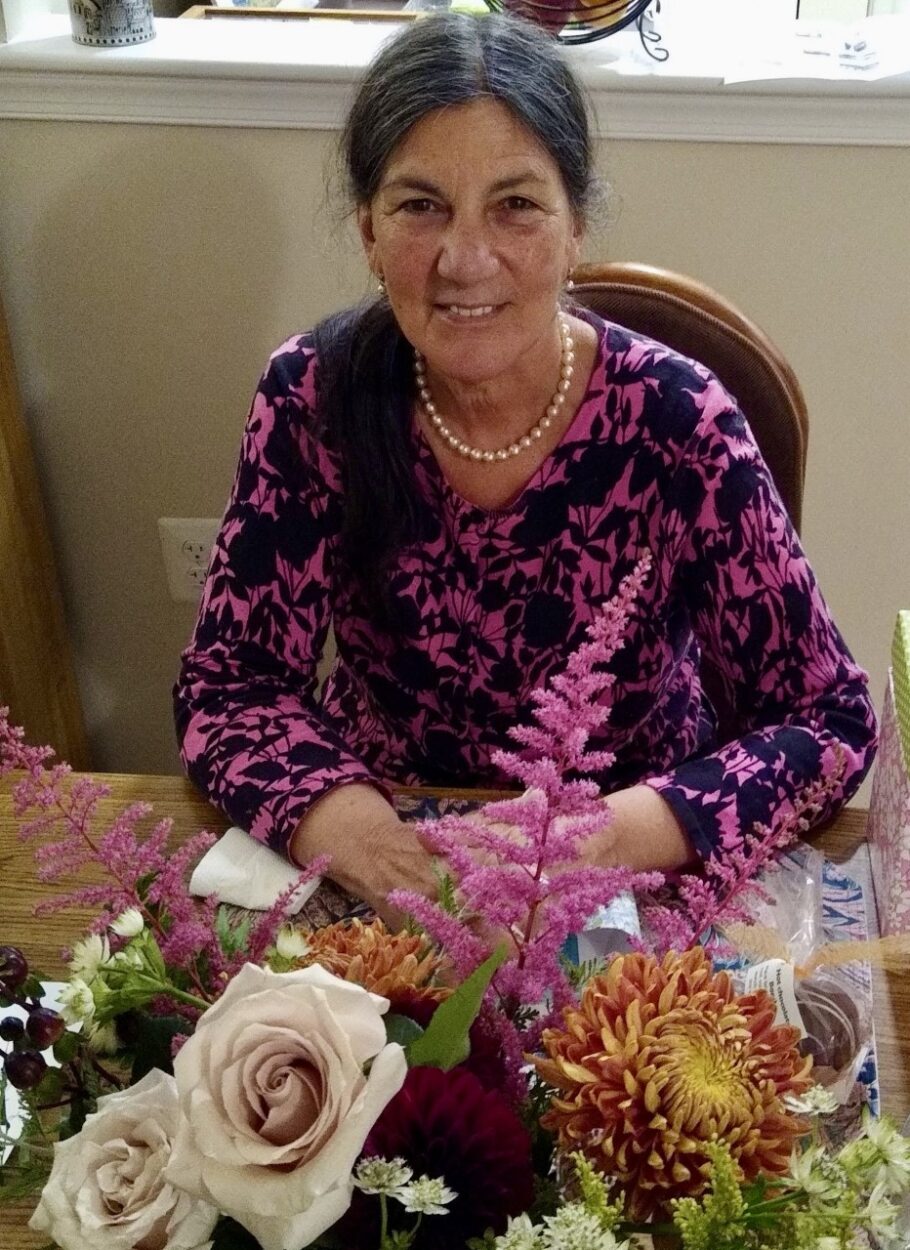
“The best part of this volunteering experience are the tutoring sessions each week with my learner! She is a joy to work with, and I am inspired with each session by her high level of motivation and commitment to learning English as rapidly as possible, her pleasantness, sense of humor, and her fortitude!! I cannot fully even imagine what she and other Ukrainian refugees have endured, and the challenges they face adjusting to life in a new country, learning the language, while carrying with them thoughts and connections with loved ones still in Ukraine.”
Would you recommend volunteering for JFS? Why?
“I would highly recommend to anyone who thinks they might be a good fit for this tutoring project, to seriously look into it. From what I understand, there is a great need for more tutors. The rewards on a personal level for the tutor can be immense, knowing that you are helping out in this effort and getting to connect and learn from a person from Ukraine…. a definite “two way street”! I would add that, for me, the work is stimulating and challenging in a very interesting way! The support from Vlad from JFS has been great, as is the support from the staff at Literacy Delaware who train and partner in this program. Questions have been answered in a timely manner, tutoring materials are supplied, and I never feel like I am “out there on my own”. Also, my learner and I have opted to do our tutoring sessions virtually, and I am able to receive ongoing technical support from a very knowledgeable and patient volunteer from Literacy Delaware! More good news is that you do not have to have a teaching background to become a tutor for this program!”
What is one fun fact about you?
“A “fun fact” about me….hmm…people seem shocked when it comes up that….I was at Woodstock!”
If you could go anywhere in the world for your next vacation, where would you go? Why?
“I do a bit of watercolor painting. Some years ago I received a photo-journal gift and was inspired to visit the Tuscany area of Italy, and try my hand at painting some of its gorgeous landscape scenes.”
When you were young, what did you want to be when you grew up?
“A teacher, and thankfully that turned out to be my career!”
What is one food you could eat every day?
“Chocolate!”
What is the last show you binged?
“I am not much of a TV watcher, but I am hooked on Heartland on Netflix! I enjoy the many characters, the natural beauty of the landscape, the family struggles and dedication to each other, and have even gained a new appreciation of horses!”
What is the best book you ever read?
“It’s too hard for me to pick a favorite…. but I am fascinated by a book I am currently reading entitled, The Jewish Quarter of Philadelphia: A History and Guide 1881-1930, by an area author, Harry D. Boonin. It gives me some insights into what my family’s experience was in settling in Philadelphia during those years as refugees.”
What are you most thankful for you in your life right now?
“My good health, my loved ones and friends, my diverse hobbies and interest areas, and G-d’s gift of each new day with its many blessings!”
__________________________________________________________________________________________________________
Our work is made possible by dedicated volunteers like YOU! Volunteers supplement the professional, clinical care provided by JFS by fostering a sense of community, building relationships, and extending your skills and kindness to older adults, refugees, and other clients of JFS. Click here to apply to be a volunteer for JFS.
About JFS Delaware
Jewish Family Services of Delaware is a place where all members of our community can receive help and support to overcome life’s challenges and cope with difficult situations. JFS is committed to providing the highest quality services available in our area, with compassion and respect for everyone. Our mission is to strengthen individuals, families, and the community by providing counseling and support services, based on Jewish values. To stay up-to-date on the latest news from JFS, sign up for our newsletter by submitting your e-mail at the bottom of the page.
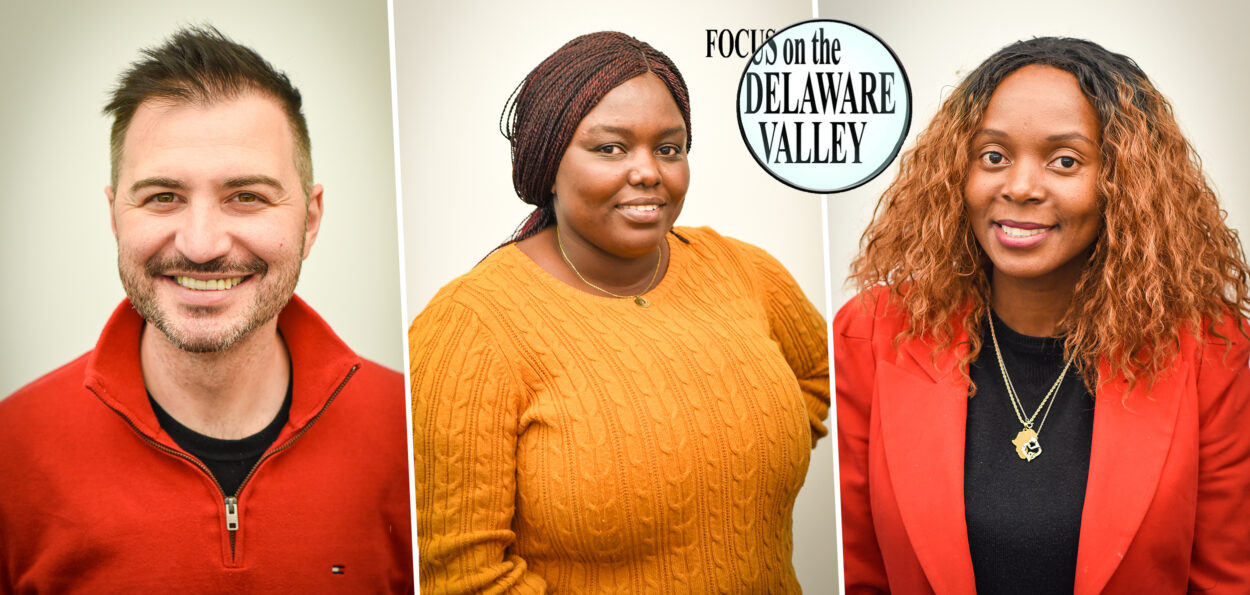 On March 5, 2023, JFS’ Jenevive Newman, Director of the RISE Program, Vlad Cerbov, Community Relations Manager, and Sophie Namugenyi, Chief Program Officer, spoke with Lora Lewis of WJBR’s Focus On The Delaware Valley podcast. Together they discussed JFS’ work with resettling refugee families in the state of Delaware.
Listen to the podcast or read the transcription below!
_________________________________________________________________________________________________________
Lora Lewis: And welcome to Focus on the Delaware Valley! I’m Lora Lewis and today we will be discussing refugee services here in Delaware with Jewish Family Services of Delaware, JFS. Let’s go around the zoom right now and introduce yourselves.
Jenevive Newman: My name is Jenevive and I’m the Program Director for the Refugee Program at Jewish Family Services of Delaware.
Vlad Cerbov: I’m Vlad Cerbov, Community Relations Manager.
Sophie Namugenyi: I’m Sophie Namugenyi, Chief Program Officer.
Lora: Would somebody like to first speak up and tell us a little bit about JFS before we even start.
Vlad: I’ll jump in. So we are a Jewish agency and that means that we adhere to Jewish values. One of these values is Tikkun olam, meaning that we perceive the world as being broken and each one of us has the duty to repair it. Having said that, our agency is 124 years old so we’re a really old agency considering here in America almost everything is new. So it’s always kind of noble for us to say that we have a wonderful, long history. And back in those days when the agency was opened, one of the reasons why was because Jews were trying to flee persecution from different countries, different continents and there was nobody locally here to support them and to provide services as refugees and furthermore as residences of the newly-established country. So therefore, Jewish Family Services was founded. Well since then a lot of things have changed and we have extended our work to provide services for all people, but in a nutshell that’s our brief history.
Lora: 124 years.. You work with young people, with the elderly, you work with people at all phases of their lives, and it has been a great organization. But you said something that’s really amazing there: they’re not just refugees, they are now new members of our community. And I think we’re touching there on what Jenevive does, refugee integration support effort. But let’s talk a little bit about who you’re seeing now, let’s talk globally first and then we’ll talk local.
Jenevive: Currently there are about 100 million displaced people globally. On a local caseload we have a lot of people from Ukraine and Afghanistan due to the two international crisis that have happened over the last couple of years… We’re also seeing people from Syria because of the ongoing crisis there. Also from Sudan and from the Democratic Republic of Congo and then from Latin American countries as well. So our caseload is kind of spread all over the globe depending on what crisis is happening at each point in time.
Lora: So you’re seeing people who are leaving war zones, you’re seeing people who are leaving because of religious or political persecution, is that an accurate picture there of who’s coming?
Jenevive: Definitely. So the UNHCR, which is the United Nations High Commissioner for Refugees, defines a refugee as one who is unable to return the country of origin based on a well-founded reason. It could be some of the things that you mentioned: it could be war, political persecution, a humanitarian crisis. So people are fleeing for all kinds of reasons.
Lora: Are these people assigned to you?
Jenevive: So let me just take you through the process. When someone flees their country, as an example, when someone flees from the Democratic Republic of Congo because of the war, they will flee to a neighboring country and register with the UNHCR. The UNHCR will take them through a process of assessment to determine that they’re actually refugees. They’ll go through a lot of screening, both medical and security screening, and then finally they’ll be ready for the resettlement process. And then at a national level we have 10 agencies that do national resettlement. HIAS is one of them, they are considered our national affiliate and we work directly with them. So HIAS will receive the refugees and distribute their cases to local agencies. So for example, they’ll tell us that we have a family of four coming from the DRC and give us a little information about them. And then our team gets to work here in Delaware. We help them in finding an apartment. Before they come in, we work with volunteers to help set up their apartments, make sure there’s food there, try to set up appointments before they come. And then when they get here, we start the case management services. Our case managers meet them at the airport, pick them up and take them to their homes and help them settle in the first few days. After that, we help them get benefits that they are entitled to through the office of refugee resettlement at the state office. We help them apply for food benefits, they get medical, they get cash assistance for the first few months that they are here. If there are kids involved, we help the kids get enrolled at school. We’ll enroll them in English language classes if there is a need for that. We help them do medical screenings because that is one of the requirements when they get here. And of course, help them get jobs. The goal in all that we are doing for our clients is to help them become self-sufficient. They are not just here to depend on the system. The goal is to help them get on their feet, get involved in their communities and become good citizens. So that is the goal of the whole case management process: helping them become self-sufficient. We guide them through the process. Of course, we are not doing this work alone, we have amazing volunteers that are involved in our communities.
Lora: Vlad, do you want to talk about your network of support that helps you in this process?
Vlad: Well first of all, I want to start with our amazing team. It’s amazing because I get the chance of working in like a little UN office, because you have people as case managers from around the globe that bring their own experiences. So when you yourself went through basically hell, I would put it that way sometimes, because integration as a refugee or an asylum seeker is not easy. It’s starting your life from scratch and it is always very challenging emotionally, financially, physically. It takes a huge toll on you. So this is why I’m saying that our team is not only competent, but they sort of lived through that and they can have the empathy and better understanding of what their clients are going through. I’ve been working at the agency for nine months and at first when I was recruited I went to their website and I couldn’t believe that JFS is doing all this amazing work. And they partner with so many organizations: churches, congregation, synagogues, you name it. Often times people confuse, because they hear Jewish Family Services, and they think the services we provide are only for Jewish clients or you have to be Jewish to be able to work at our agency, but in reality, we’re very open. You don’t have to be Jewish to work for us you. You don’t have to be Jewish to receive our services. In fact, if we’re talking about refuges, I would say 99.9% of our clients are not Jews. And it sort of tells you about the commitment the whole Jewish community has about supporting refugees because historically our ancestors have been bounced back and forth. That’s why we understand the need to support someone who is displaced. And I have to tell you, it’s a sort of a two-way street. On one hand, yes, we’re offering fantastic opportunities for our volunteers to provides services and support refugees. But on the other hand, these volunteers are able to get a unique experience. They’re able to interact with somebody from a completely different culture and understand new things. So it’s kind of like an exchange that is basically happening. It’s a win-win situation, that’s how I like to see it.
Lora: Is the U.S. a welcoming place for a refugee? Are we prepared for them? Are we welcoming?
Vlad: I have to tell you that before moving to Delaware, I have actually had a chance to travel quite extensively throughout America and I also lived in Europe. I myself am coming from Eastern Europe, so I had a chance to spend some periods of time living in Berlin and Prague. And during that time, if you remember, we had a crisis with Syrians happening and I could actually witness firsthand to see how the Europeans are proceeding and supporting these Syrian refugees. And I kind of can compare it to what’s happening here in the United States, but what I’m going to do is I’m going to talk more about Delaware. Because Delaware is sort of a unique place, and overall there are many times when I caught myself saying such words as like, “Wow, I was never expecting that people would be so welcoming in receiving refugees.” Overall, the public is very open, they are curious, they are interested. They are surprised to hear the stories that the refugees are sharing with them. So I think if we’re talking on a personal level, on a human level, people are definitely open and they’re welcoming. Myself, as an asylum seeker, I saw how I was treated personally and I have to tell you that Delaware is an extremely welcoming state. I mean, on the political level, if we’re talking about churches, the social infrastructure that exists in the state is very welcoming. Again, not to mention the people. I’ve been more closely involved with the Ukrainians and often times I’m hearing stories. One of our first clients, she was telling me that she landed in the airport in Philadelphia and they were standing in security. She says, “My daughter and I both were extremely tired, we had this heavy luggage with us and one of the officers approached us and asked us to show them our documents.” So they pull up their Ukrainian passport. And the officer, his face changed. He said, “Oh you’re from Ukraine?” And they’re like, yes. Keep in mind, they’re also scared. It’s their first time in America, for some of them it’s the first time ever leaving their home country. It’s a different language, different people, everything is different. So she is cautiously saying yes, but she doesn’t know what the reaction will be. And the officer looks at her, like oh okay, and he basically jumps in and picks up their bags and says, “Follow me, follow me.” And he cleared them through security. And they come to me and they said, “This is what happened, this is how we entered in America.” And I looked at them and I said, “You don’t understand, not many people get that kind of treatment.” But they see it and when they travel across different parts of Delaware they see the support, the Ukrainian flags, the people approaching them. The other day I actually spent some time helping one of the Ukrainians open up their bank account and the clerk at the bank as soon as she saw the Ukrainian passport she was like, “You know, you’re supposed to bring this and that but don’t worry we’ll make it work, we’ll make it work.” And it’s because people understand the pain. And that’s one of the beautiful things about all of this. Yes, it’s a tragedy when you’re being displaced, but at the same time when you see the support that you’re getting from strangers in reality, you sort of believe in the humanity and you believe that nothing is lost. In spite of politicians and the wars and conflicts, people naturally want to show empathy. People naturally are kind. And if they are given that chance to demonstrate that, they will certainly do so.
Sophie: I wanted to add a little bit on what Vlad has said. We all agree that Delaware is an extremely welcoming state. We do work with Governor Carney’s office, we get a lot of support from Senator Coons office. So again, we work with our legislators to make sure that the refugees and migrants who come in to Delaware are welcomed and treated well. So without the support of our legislatures, without the support of our political figures we would not be able to do this work. On a national level, is the U.S. a welcoming country? I think we all agree yes, but we could do more. Jenevive referenced that there are over 100 million refugees, 100 million people displaced in the world and currently the U.S. accepts about 125,000 refugees to come in the country. So again, there are countries all over the world that are doing more. The U.S. is doing something, but we could definitely do more and welcome more refugees and people who are displaced.
Jenevive: To add to what Sophie was saying, last year the number was 125,000. Out of that, we were only able to welcome nationwide 25,465. So that’s just 20% of that allocated number. So we are doing a lot, but there is always room to do more.
Lora: So they are coming without adequate resources for welcoming them and many people are scared, they’re without their belongings, maybe they’ve never seen people of a different culture or language or religion. Is there set programming of care that they will receive?
Jenevive: So that’s when we come to the case management process. There are clear guidelines of what needs to be provided. We need to provide housing, and we need to make sure that they are employed, that their children are in school. They have been benefits through the office of refugee resettlement and food benefits and Medicaid. So there are basic provisions. But definitely there is room to do more. At an agency level, one of our strong pillars is mental health support because we do realize that is very crucial to what we are doing. Our team is full of social workers, clinicians, we have a strong therapeutic department and outpatient behavioral health department. So we are providing group programming, we are providing mental health support in a group setting. We are referring our clients to individual counselors. Most of them have lived through trauma and we need to provide that support. So as an agency we realize the need for psychological support and we are providing it. That’s one of the things that JFS prides itself in, we’ve been able to provide the mental health support for this population.
Lora: At what point do they lose benefits that they might be qualified for and at what point do they have to become self-sufficient and part of a community?
Jenevive: The benefits are mainly based on income levels. So as soon as they start earning, they begin to gradually lose some of these benefits. And that’s the whole goal. The goal is not to keep them on the benefits forever. Our plan is to get them employed, to get them self-sufficient. They do continue to receive support from us. The Case Management Services are available to clients until the five year mark. The state refugee support services program is available to them for five years. We usually do not see clients throughout those five years, most will become self-sufficient within a year. Of course, they will continue to receive support from volunteers. Most of the volunteers that Vlad is matching with clients become family friends. So even if they are off our caseload, they still have some people they can rely on. They can always reach out to us. Self-sufficiency is a process. Self-sufficiency is ongoing.
Vlad: It’s one thing when you find a job just to be able to survive and pay the bills and meet your needs. But our goal is always to make sure that they are able to thrive in America and that takes a while. It takes a while for them to get adjusted. I remember myself when I arrived, even though I previously had been visiting as a tourist, being a tourist is one thing but starting the immigration process is completely different. And I was lost. There were many things that people were expecting me to know, but I had no idea. And therefore, it took me years and years before I finally came to the conclusion, okay this is what I want to do in my life. And when this moment happens, it’s sort of like, aha. For me, that actually happened last year in November when I realized what I want to do with my life and that’s when I said, oh I want to pursue education and I went back to school. But you have to understand, in order to come to that point you have to listen, you have to make connections, you have to make new friends, you have to just gather information. And then you’re like okay, this is what I feel like I’m interested it. And that’s our goal, whether it’s getting a better job, whether it’s getting back to school, whether it’s establishing a family, or opening up a business. We sort of see ourselves as somebody who should be there for the refugees to support them and guide them. I wanted also to add, one of the reasons why we’re adding our volunteers and this is sort of like my intro and always the message. It’s easier for the volunteers to come with this perception that these are poor people and we have to help them, therefore let’s offer them all the resources. No, we want to explain to them that these refugees that are coming are adults that had a life in their home countries. They were successful, these are smart people. We need to equip them with knowledge and skills, sometimes with our connections and social capital, and explain to them how things work in the U.S. And for the most part, we don’t have refugees who say I don’t want to work, I’m going to be fine on the benefits. That’s a myth. No, everybody wants to be successful. Everybody wants to demonstrate to members of their family that stayed in their home country, that look I came to America with nothing and this is how I’m living my dream. And our goal, as JFS, is to support them, to understand them, to provide all the options and let them decide. And whatever they decide, we will be there for them.
Lora: Seeing them as a charity case is one myth. Do you have any other areas where you have to re-educate your volunteers or the organizations who are stepping up and saying I want to get involved? How do you get a volunteer up to speed to do this properly?
Vlad: Each volunteer has to do the onboarding process. And we have a fantastic way of doing that. We usually give them an online survey where we ask what kind of work they like to do, what’s their personal background, how much time do they have available. From there we do a background check and then they have to do training as a volunteer. So we currently ask our volunteers to go through four separate trainings. One of them is Refugee 101, in which they understand who are the refugees, why they’re considered to be refugees, just you know all of the background information that is necessary for them to know. The second one is about cultural sensitivity and this is where we try to explain to the volunteers that they are not there to impose their culture. You can explain to them about American culture, about the integration and assimilation process, but you also have to understand that refugees are bringing their own experience and culture. And this is how America was formed, it’s a melting pot. Everybody was bringing something that they had from their corner of the world, and that’s the beauty of it in my opinion. The other training we do, which is also crucial, is we try to explain to the volunteers the trauma that the refugees have undertaken, and what are the ways of approaching that and what is a good time to refer refugees to see a therapist. We also do provide social gatherings for refugees, in which one of the purposes is for them to meet and greet other refugees, but at the same time we also are encouraging them to participate in social group therapy sessions, which are conducted by one of the therapists from JFS. The last meeting that we had on January 11 with Ukrainians was very successful. Everybody was participating… And we also encourage our refugees to talk and share their cultural experiences with the volunteers. That’s what I was talking to you earlier about the two-way street. It’s not just a process where we have to educate them as residents or citizens of the U.S., but they also are educating us about their own culture.
Lora: If someone is hearing this and maybe they do not have the time to dedicate to training and working one-on-one, are there ways for us to get involved? Maybe other volunteer opportunities if I’m a business or I am a church group or youth group hearing this. How do we get involved with your work?
Sophie: Thank you, Lori. Yes, our volunteers and ambassadors can be involved in so many different ways. We do have different types of volunteers. We have people who just want to read to the kiddos or help kids understand the school system. This is a new family and they’re not sure how to communicate with the teachers, there’s always so much communication in the backpack. So there are some volunteers who we just want to be a liaison between parents and the school. There are some who do transportation and assist with them going to appointments or church services. And those are strictly just transportation-based volunteers. And then we do have others who take them to do fun activities like going to Longwood Gardens, going to the library. And sometimes it’s a one-time-only activity as opposed to ongoing. We are here to let you know that most of the volunteers, when they work with the families, they just bond with them and they always want to go back and connect and check in and support them. Even though we value the time on the volunteer activities, we also are able to take donations for people who may just want to donate or support families with us through financial support or different materials. Like we mentioned earlier, we do a lot of house set up for the families that are coming in. So we do get donations of well-used materials or toys for the kids, or clothes or jackets. So there are so many different ways you could find on how to support JFS Delaware and it’s all on our website, so please feel free to visit www.jfsdelaware.org.
Lora: And I hate to say this, we are actually out of time. Jenevive, if you want to start with some parting words and we’ll go around the room.
Jenevive: I just wanted to add to what Sophie was saying because she had mentioned businesses and other well-wishers in the community. Something that we are always looking out for is employers that are friendly to our refugees, and understanding that some refugees speak English, some will be learning English. And we are always looking out for safe and affordable housing. So that is something that is always needed. And my parting words would be that refugees are hard-working people. People have a lot of misconceptions about refugees. They are hard-working people, they are not here just to feed off the system. They want to work, they want to build businesses. We have a lot of success stories of people coming here and being integrated into the community.
Vlad: We have many volunteer opportunities. It could be a short time assignment or a long-term assignment. And if you even think you don’t have any talents or any ideas what to do, please feel free to contact me. I’ll be more than happy to discuss some options for you to help. And I just want to briefly say that we had doctors that were willing to provide free medical exams. We had one guy who was in finance and he was like, “What can I do, how can I help somebody who is a refugee?” When you come to a new country, I mean I am thinking about myself, I had no clue what a credit card and debit card were and what’s the difference. And these are the questions that refugees are asking and they need this training. Financial literacy is one of the big demands. So what I’m saying is, if you think you don’t have a talent or something to offer, talk to me. We’ll figure out something.
Sophie: So what I wanted to add is typically our refugees, by the time they come to the U.S., have been through an exhausting 18 to 24 month vetting process. It’s a long, long process. Some of them have been in refugee camps for years, they’ve had babies in the refugee camps. So they are so eager and excited to start the American life, just to work on that American dream. So again, they are here to be productive citizens. They are so eager to work. And we just want to thank the Delaware community. We just want to thank everyone who supports refugees.
Lora: Again, for Jewish Family Services. jfsselaware.org. Learn more about the programming that they offer for the entire community and of course the vital programming that they offer for our newest members of the community, the refugees who are arriving. If you have time to volunteer, they will train you. If you have a little time to participate, they will find a place for you. If you can donate, they do need supplies, they need goods, they need clothing, they need jobs, and they need your expertise. And again, find a place for you to help at jfsdelaware.org. My guests today are Vladmir Cerbov, Community Relations Manager, Sophie Namugenyi, she is Chief Program Officer, and Jenevive Newman, she is Refugee Program Director.
In January 2023, Susan Nakaweesa became the first member of the JFS Mental Health Fellowship Program to become fully credentialed as a Licensed Professional Counselor of Mental Health (LPCMH). The Fellowship Program is an innovative response to the rapidly increasing mental health demand throughout our community, as well as the shortage of Licensed Mental Health providers throughout the state. In May 2022, nearly $100 million for community projects up and down the state was secured by Delaware’s congressional delegation. $3.5 million of those funds went to Jewish Family Services of Delaware to create a Mental Health Fellowship Program.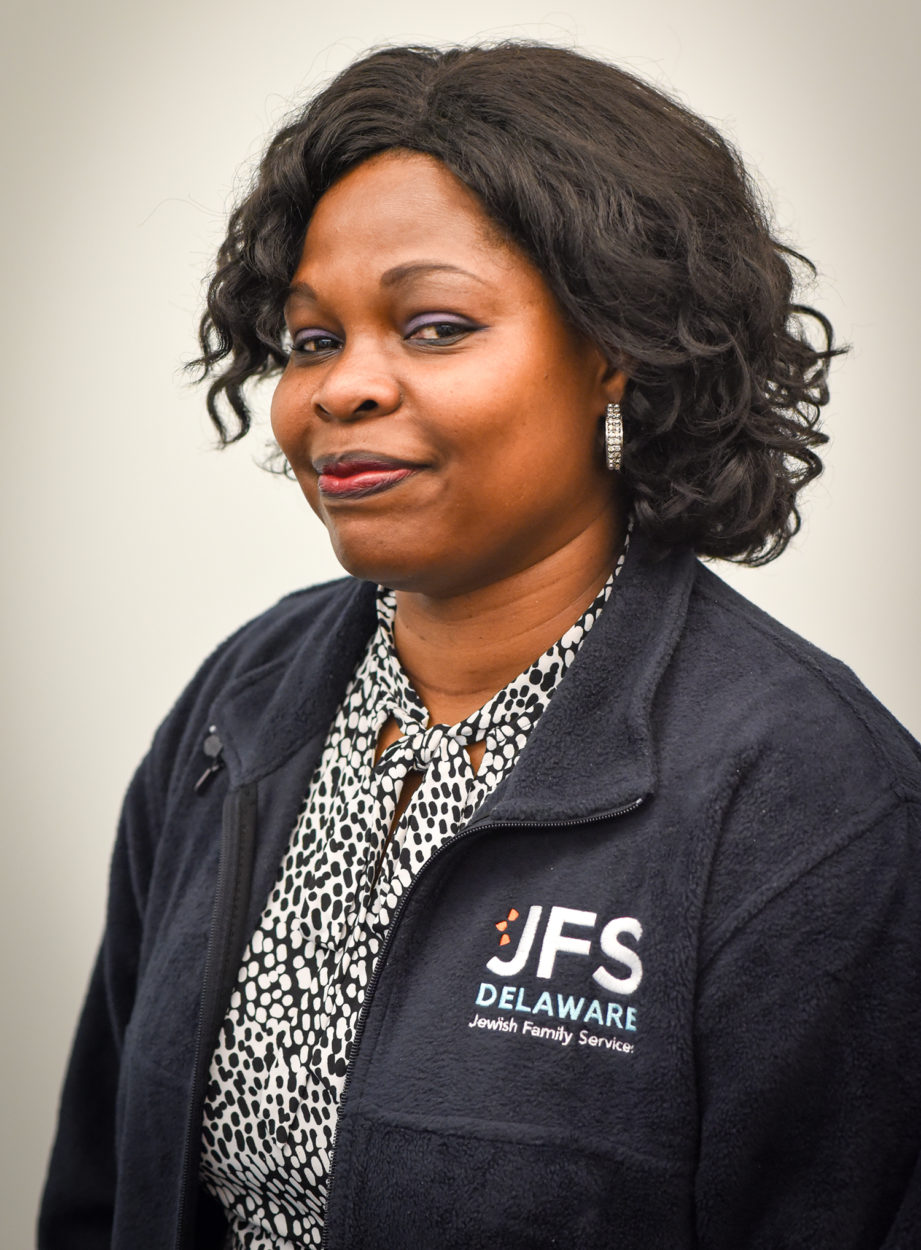
The Fellowship Program is designed to provide master level social workers and mental health counselors with the most advanced trainings, clinical supervision, and support possible so that they can grow in their competency, and ultimately become credentialed as licensed counselors.
“Being part of the Fellowship Program benefitted me in several ways, including skills training and professional development, obtaining resources, financial support, and a sense of belonging which made me feel more empowered and determined,” said Susan.
Susan may be the first of the cohort to achieve licensure, but she’s had a long journey to get there. She moved to the United States with her husband from her home country of Uganda in 2014. They were granted a special immigrant visa as a family because her husband was working with the American Embassy in Uganda. They settled in the state of Georgia, where Susan became a caregiver in a daycare center.
But Susan had aspirations of working in the mental health profession. Before she moved to the U.S., she was the head of the English department at a school in Uganda, and was working with her school to become a school counselor. She had already obtained a bachelor’s degree in Community Psychology and decided to go back to school for her master’s degree. She enrolled in an online Counseling program at Walden University.
While enrolled at Walden, Susan was having trouble finding an internship to fulfill the requirements of her master’s program. A friend of hers had a connection with Sophie Namugenyi, Chief Program Officer of JFS Delaware, and recommended that Susan reach out to Sophie about a possible internship. Susan did just that, and a couple of interviews later, she was moving to Delaware to be an intern for JFS’ Promoting Safe and Stable Families (PSSF) program.
Six months later, Susan was promoted to a Career Counselor position in the FutureLink workforce development program at JFS. When she completed her Master’s in Clinical Mental Health Counseling from Walden, Susan went into community based therapy and did that for two years while also running groups for parents and women in shelters.
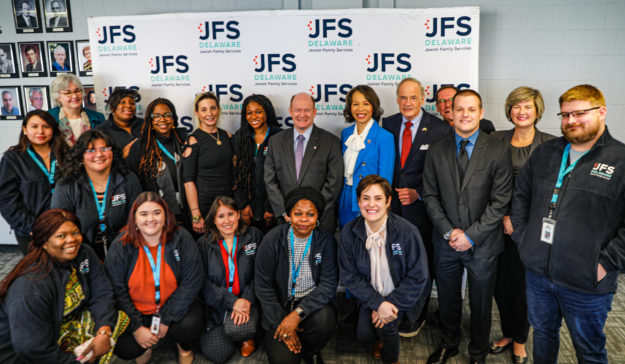
Delaware congressional delegation celebrates increased federal funding for JFS Delaware’s mental health programs
Susan then transitioned to office-based therapy with clients and left outpatient community-based therapy. However, because she was not licensed, she could only see clients who had Medicaid and not other forms of insurance. As a result, she was not getting a full caseload. Enter the JFS Fellowship Program. Susan joined the newly minted Fellowship Program and charted a path towards becoming licensed.
“I knew that I wasn’t giving up on getting my license. I was going to continue pursuing that,” said Susan. “The Fellowship played a very significant role in this. There were people investing in me. That was so powerful. And it was a driving force that motivated me so much to work so hard towards this. And here we are.”
The impact of being invested in by people who care about you can never be underestimated, especially for those coming to the U.S. from a different country and culture. When Susan first started at JFS, she feared making phone calls to clients because of the language barrier. But through the help of a mentor, she has been working on overcoming that fear. “I’ve already seen myself grow so much,” said Susan. “I attribute it all to the supportive team at Jewish Family Services. And the Fellowship Program. I really do appreciate everything because I wouldn’t be where I am today.”
Now that Susan is a Licensed Professional Counselor of Mental Health, she is looking to transition back into Outpatient Behavior Health (OBH). She also plans to continue promoting behavioral change and optimal mental health support, but also to engage in social change initiatives aimed at improving the lives of people in underdeveloped communities.
Susan is one of twenty fellows that make up the JFS Fellowship Program. Together, these fellows address unmet mental health needs in Delaware by providing upwards of 14,000 individual mental health sessions to nearly 2,000 Delawareans in need of support.
This week is National Volunteer Week. This week-long celebration is about placing a spotlight on inspiring figures whose invaluable seeds of kindness through volunteering are bettering the community and our world in general. We here at JFS Delaware would not be able to fulfill our mission to strengthen individuals, families, and the community without the help of our incredible volunteers. One of those amazing volunteers is Nancy!
Why did you decide to volunteer for JFS?
“I heard that JFS was working with Afghan refugees and I wanted to help.”
What is the best part of volunteering? 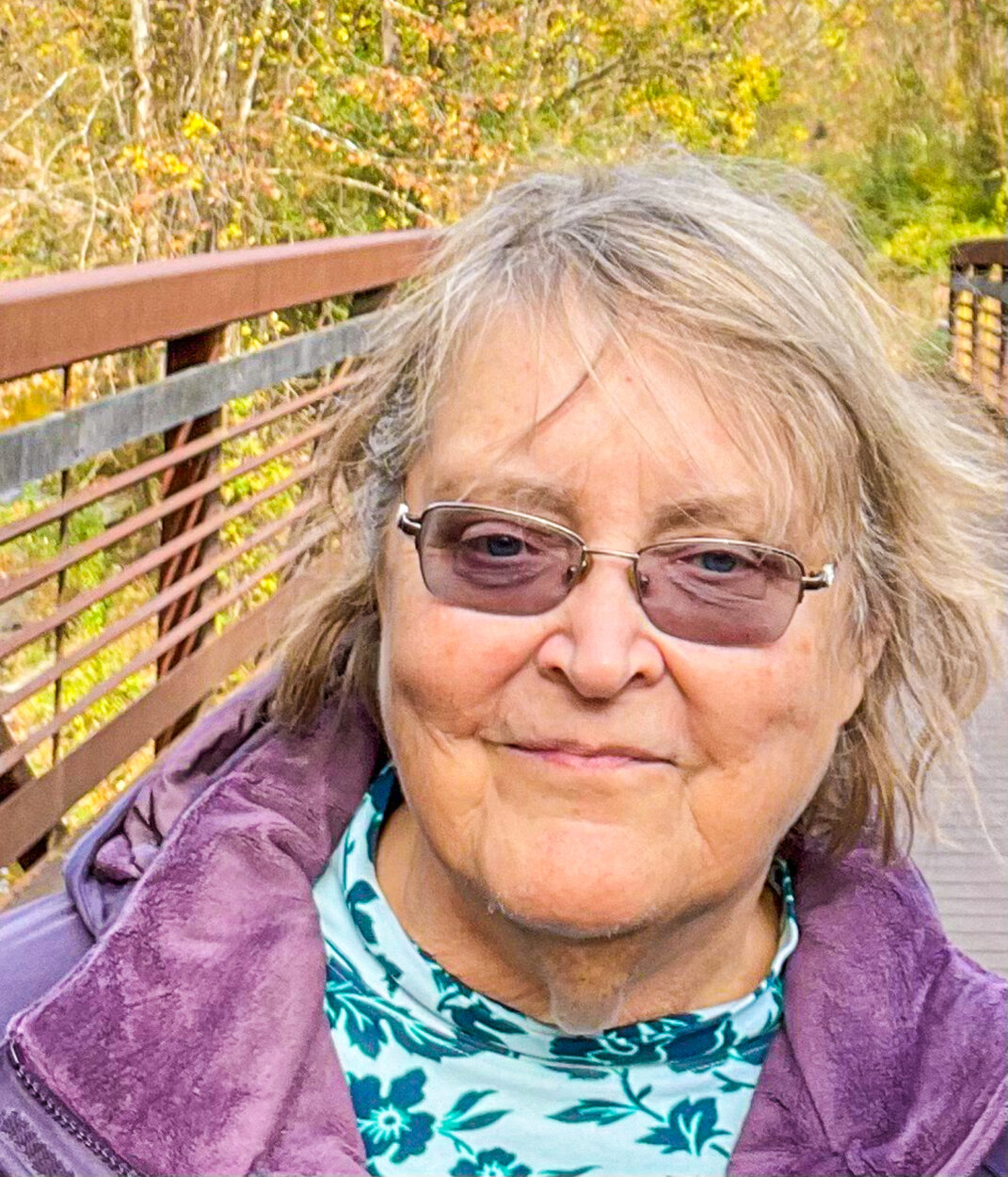
“I have enjoyed meeting new people, making new friends, and learning about new cultures.”
Would you recommend volunteering for JFS? Why?
“Yes, because there is a lot of need to help the refugees coming to Delaware, and it is such rewarding work to help make a difference in someone’s life.”
What is a fun fact about you?
“I love to travel and I’m learning languages to help when I do that.”
If you could go anywhere in the world for your next vacation, where would you go?
“I would like to go to Belize, Japan, Australia. … do I have to pick one??? These are all places I haven’t traveled yet…”
When you were young, what did you want to be when you grew up?
“Teacher.”
What is one food you could eat every day?
“Yogurt.”
What is the last show you binged?
“The Marvelous Mrs. Maisel.”
What is the best book you ever read?
“I’m a retired librarian, so this is too hard to pick. I enjoy British mysteries like Agatha Christie.”
What are you most thankful for you in your life right now?
“My family.”
__________________________________________________________________________________________________________
Our work is made possible by dedicated volunteers like YOU! Volunteers supplement the professional, clinical care provided by JFS by fostering a sense of community, building relationships, and extending your skills and kindness to older adults, refugees, and other clients of JFS. Click here to apply to be a volunteer for JFS.
About JFS Delaware
Jewish Family Services of Delaware is a place where all members of our community can receive help and support to overcome life’s challenges and cope with difficult situations. JFS is committed to providing the highest quality services available in our area, with compassion and respect for everyone. Our mission is to strengthen individuals, families, and the community by providing counseling and support services, based on Jewish values. To stay up-to-date on the latest news from JFS, sign up for our newsletter by submitting your e-mail at the bottom of the page.
This week is National Volunteer Week. This week-long celebration is about placing a spotlight on inspiring figures whose invaluable seeds of kindness through volunteering are bettering the community and our world in general. We here at JFS Delaware would not be able to fulfill our mission to strengthen individuals, families, and the community without the help of our incredible volunteers. One of those amazing volunteers is Barbara!
Why did you decide to volunteer for JFS?
“I believe in the Jewish view of “Tikkun Olam”, helping to repair the world. Not only was I created to stay healthy and happy, but to do so for others. When I was young, I volunteered at Lankenau Hospital in the Emergency Room for 10 years. I now enjoy doing more than donating money. I like to give of myself.”
What is the best part of volunteering? 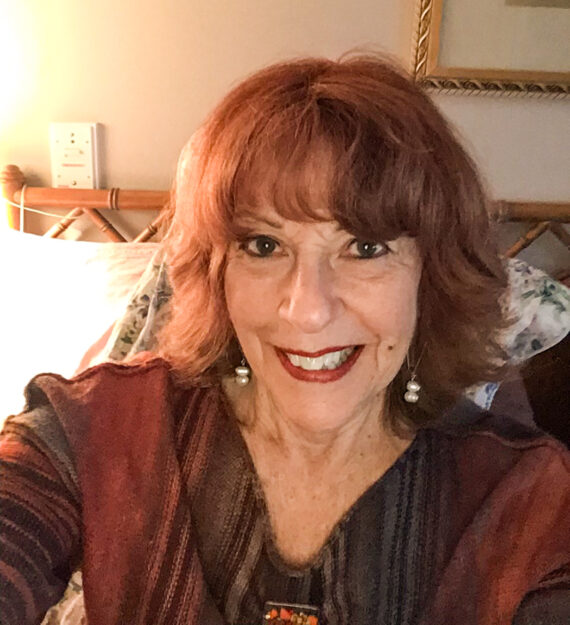
“Meeting new people from around the world, who have suffered violence in war, or poverty, and could use a helping hand, gives me pleasure. I am fortunate to have my health, and be retired. So anything I can do to help another I am willing to do. Having been a medical office manager for 25 years, and a teacher for five years, I have the skills to teach English.”
Would you recommend volunteering for JFS? Why?
“I would definitely recommend volunteering for JFS. I see that it is a very well run organization, helps many diverse people, and the Community Relations Manager Vlad Cerbov has been a pleasure to work with. He matched me up with a lovely Ukrainian woman and now we are teacher/student/friend.”
What is a fun fact about you?
“When I was a young mother, many years ago, I took foster children into my home, where they lived for a few years, before going back to their own parents. My own two children learned to share and realized that we are here to help others.”
If you could go anywhere in the world for your next vacation, where would you go? Why?
“I have a son in southern California, so I would love to travel with them to Hawaii, where I’ve never been.”
When you were young, what did you want to be when you grew up?
“Teacher.”
What is one food you could eat every day?
“Coffee, Greek yogurt, and fresh fruit.”
What is the last show you binged?
“Extraordinary Attorney Woo.”
What is the best book you ever read?
“Must give two…1. The Boys in the Boat by Daniel James Brown, 2. Uncle Tom’s Cabin by Harriet Beecher Stowe.”
What are you most thankful for you in your life right now?
“I’ve lived to see five grandchildren grow up, two are married, and one great granddaughter living nearby. I’m living in a fantastic senior community with my brother, and both of us are well and active.”
__________________________________________________________________________________________________________
Our work is made possible by dedicated volunteers like YOU! Volunteers supplement the professional, clinical care provided by JFS by fostering a sense of community, building relationships, and extending your skills and kindness to older adults, refugees, and other clients of JFS. Click here to apply to be a volunteer for JFS.
About JFS Delaware
Jewish Family Services of Delaware is a place where all members of our community can receive help and support to overcome life’s challenges and cope with difficult situations. JFS is committed to providing the highest quality services available in our area, with compassion and respect for everyone. Our mission is to strengthen individuals, families, and the community by providing counseling and support services, based on Jewish values. To stay up-to-date on the latest news from JFS, sign up for our newsletter by submitting your e-mail at the bottom of the page.
This week is National Volunteer Week. This week-long celebration is about placing a spotlight on inspiring figures whose invaluable seeds of kindness through volunteering are bettering the community and our world in general. We here at JFS Delaware would not be able to fulfill our mission to strengthen individuals, families, and the community without the help of our incredible volunteers. One of those amazing volunteers is Yulia. Yulia is a Russian-speaking marriage and family psychotherapist and offers counseling services to Ukrainian refugees. Read on to learn more about Yulia!
Why did you decide to volunteer for JFS?
“When the war started in Ukraine, I wanted to help refugees of the war. One day, Vlad Cerbov, the Community Relations Manager for JFS, contacted me stating that I was the only Russian speaking family therapist in Delaware. He asked if I could help children and families of Ukrainian refugees; those who are willing to speak Russian. I accepted right away and have been involved with the RISE program since then.”
What is the best part of volunteering? 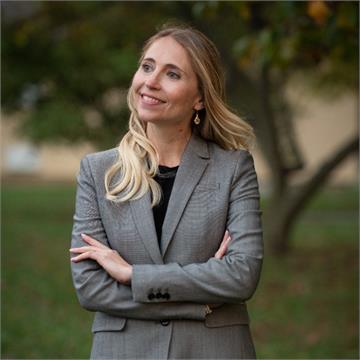
“For me, the best part of volunteering is to be able to use my skills to be able to make a difference for those who truly need it. One of my dear friends, who is a social worker, once told me that he is making a difference one person at a time. This is how I feel, every drop of kindness counts, as it contributes to the ocean of love and care.”
Would you recommend volunteering for JFS? Why?
“Yes, I would, specifically for two reasons: first of all, JFS serves people who are truly in need and benefit from different expertise in order to re-launch their lives. Secondly, JFS represents a group of people who truly care, and it’s amazing to be part of a such collaborative and caring team.”
What is a fun fact about you?
“I consider myself a nomad: I lived, studied, and worked in five different countries (Russia, Switzerland, Belgium, UAE, and USA).”
If you could go anywhere in the world for your next vacation, where would you go? Why?
“I would love to visit Italy. In the past five years I have been fascinated by the Italian culture, language, and gastronomy. I am studying Italian, and hoping to exercise my new language skills during my upcoming trip to Assisi, where I am planning to attend an International Family Therapy Conference.”
When you were young, what did you want to be when you grew up?
“I always wanted to become a veterinarian, as I always loved animals and love to be around them.”
What is one food you could eat every day?
“I love dairy products, and probably would be very sad if I did not have a yogurt or a piece of cheese at least once a day.”
What is the last show you binged?
“I have to say that I don’t watch TV too much, maybe once a week for a movie. Being fascinated by English monarchy, specifically by the personality of Elizabeth II, I did like The Crown, and watched all of it.”
What is the best book you ever read?
“Books are my true passion. In fact, I am about to open my own bookstore in Bellefonte, Delaware. The name of the store is Finist and the Owl. The bookstore has four rooms organized developmentally from a small child to an adult and has three languages (English, French, and Russian). One of my favorite books is War and Peace, Leo Tolstoy being one of my favorite authors.”
What are you most thankful for you in your life right now?
“I am thankful for an opportunity to be in a country where your dreams can come true, sometimes, you have to work very hard for that to happen, but I truly believe that the USA is the land of possibilities.”
__________________________________________________________________________________________________________
Our work is made possible by dedicated volunteers like YOU! Volunteers supplement the professional, clinical care provided by JFS by fostering a sense of community, building relationships, and extending your skills and kindness to older adults, refugees, and other clients of JFS. Click here to apply to be a volunteer for JFS.
About JFS Delaware
Jewish Family Services of Delaware is a place where all members of our community can receive help and support to overcome life’s challenges and cope with difficult situations. JFS is committed to providing the highest quality services available in our area, with compassion and respect for everyone. Our mission is to strengthen individuals, families, and the community by providing counseling and support services, based on Jewish values. To stay up-to-date on the latest news from JFS, sign up for our newsletter by submitting your e-mail at the bottom of the page.
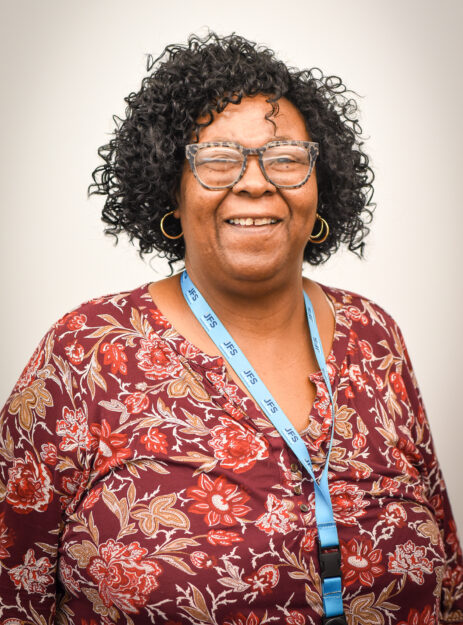
Let’s meet Lucinda!
Lucinda is a Master’s Level Therapist in the JFS Mental Health Fellowship Program.
Why did you decide to work for JFS?
“JFS was the only agency in Delaware that was willing to give me a chance to get back into my career of social work, after sacrificing my career to raise my children and grandchildren.”
What inspires you to come to work every day?
“I love what I do. For me, being a social worker is a passion.”
What is the best part of your job?
“The people!”
What is a fun fact about you?
“I’m a jokester. I love to laugh and see others laugh.”
If you could go anywhere in the world for your next vacation, where would you go? Why?
“Nowhere! I just got back to my first love. I’m still soaking up the joy, happiness, and gratitude of being at JFS.”
When you were young, what did you want to be when you grew up?
“A fashion designer.”
What is one food you could eat every day?
“Belvita Crackers, Blueberry.”
What is the last show you binged?
“Married at First Sight.”
What is the best book you ever read?
“The Science of Mind by Ernest Holmes.”
What are you most thankful for you in your life right now?
“My family, Centers for Spiritual Living – Delaware, and being a part of JFS.”
Written by: Marsha Akoto, RISE | JFS Group Programming
Over the past several months, I have had the great opportunity to facilitate HIAS Women’s Empowerment Groups within the RISE department. These groups consist of Afghan Evacuees and a Cameroonian refugee. I have really witnessed the growth, resilience, and eagerness to learn in a group of young women.
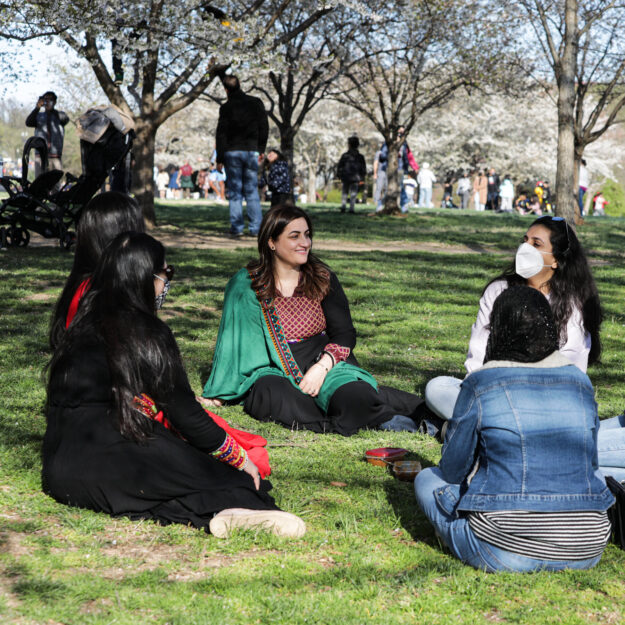
When I first started working with these young women, I noticed there was a lot of conflict with adjustment to life in America – culture adjustment issues, career concerns, language anxiety, and essentially a lack of feeling empowered. Yet through all these challenging times, they have all persisted with the help of these groups and have accomplished many of their personal goals. So far, we have covered topics such as financial literacy, professional development, nutritional education, and we are currently focusing on women’s health.
One woman said, “I am very thankful for this group because in Afghanistan, we do not really talk about these things.” Another said, “This information is important to learn about because when I was younger, they split up girls and boys and said it was not necessary to learn about women’s health.”
I had several women state they had no prior knowledge about vaccinations against cervical cancer, diversity in contraception, or the several resources available in the U.S.
Furthermore, we were able to celebrate and honor Women’s Month, as we invited an OBGYN from Christiana Hospital to educate these young ladies on women’s health, reproductive rights, healthy sexual practices, and consenting in America. The young ladies asked many questions, gained a lot of health literacy, and felt empowered to make decisions for themselves. It has been rewarding to see the tenacity, resilience, and hard work of these strong women!
__________________________________________________________________________________________________________
This important work would not be possible without the generosity and volunteerism of community members and partners like YOU! Click here to give to JFS.
About JFS Delaware
Jewish Family Services of Delaware is a place where all members of our community can receive help and support to overcome life’s challenges and cope with difficult situations. JFS is committed to providing the highest quality services available in our area, with compassion and respect for everyone. Our mission is to strengthen individuals, families, and the community by providing counseling and support services, based on Jewish values. To stay up-to-date on the latest news from JFS, sign up for our newsletter by submitting your e-mail at the bottom of the page.
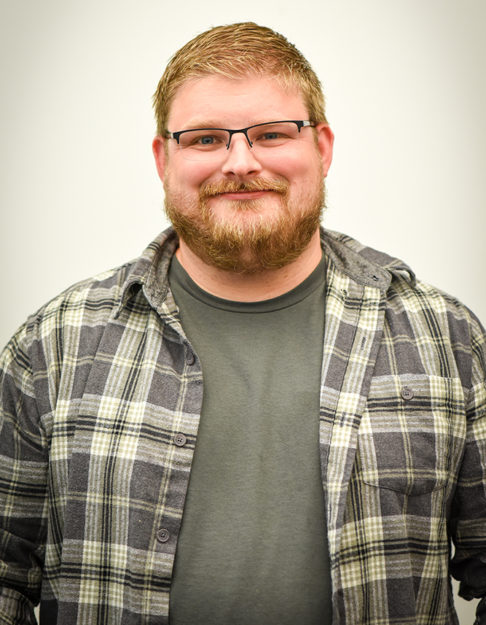
Let’s meet Zach!
Zach is a Community Based Counselor at JFS Delaware, working with youth and their families in school, home, and community settings.
Why did you decide to work for JFS?
“JFS is where I completed my practicum for my master’s degree. I wanted to stay to participate in the Fellowship Program so I could receive help getting licensed.”
What inspires you to come to work every day?
“The ability to help support my family financially and to help support my community emotionally/mentally.”
What is the best part of your job?
“The ability to work with diverse groups of people.”
What is a fun fact about you?
“I am left handed.”
If you could go anywhere in the world for your next vacation, where would you go? Why?
“For my next vacation, I will be taking a cruise around Scandinavia. My wife and I have already traveled through most of Europe and wanted to branch out to South America, but with the birth of our daughter, we thought a cruise might be easier with an infant.”
When you were young, what did you want to be when you grew up?
“Police officer.”
What is one food you could eat every day?
“Pizza.”
What is the last show you binged?
“Entourage.”
What is the best book you ever read?
“The Last Kingdom Series by Bernard Cornwell.”
What are you most thankful for you in your life right now?
“My daughter.”
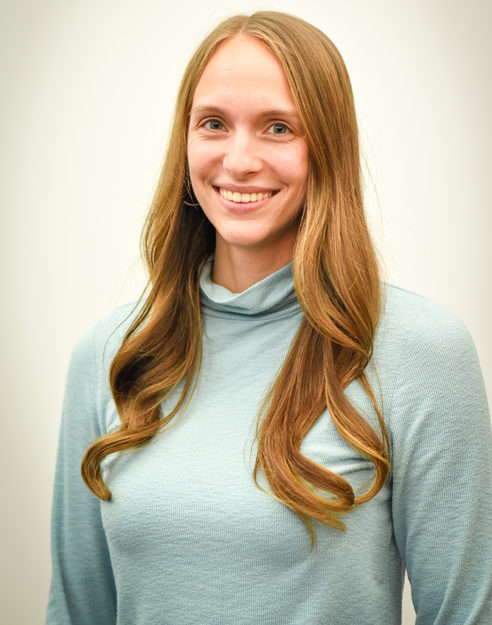
Let’s meet Jordan!
As a Master’s Level Therapist, Jordan provides evidence-based mental health therapy services to individuals and families. She believes in providing a safe environment for each person to be seen, heard, and known and in tailoring treatment to each individual’s unique needs.
What made you decide to work for JFS?
“I started at JFS as a virtual intern during the pandemic as part of my Master’s program and later took an opportunity for a part-time position based on my positive internship experience. Since then, my role has certainly grown and changed, but I am grateful to have always been encouraged to follow my own career goals and passions at JFS.”
What inspires you to come to work every day?
“As cheesy as it sounds, I do feel that I am doing the work that I was made to do. It is not always easy! But every day I know that I am putting my skills and talents to use in a way that can make a positive impact in people’s lives. I also know that when the work gets hard, I can lean on my co-workers and supervisors for support.”
What is the best part of your job?
“The moments when I get to get a glimpse of positive change. Seeing clients apply skills they have learned and make change for the better in their lives always warms my heart.”
What is a fun fact about you?
“When I was a kid, I won the geography bee at my school twice. (Yes, I am aware that I was a nerd. I still am.)”
If you could go anywhere in the world for your next vacation, where would you go? Why?
“Singapore – It was my home for a few years, and I definitely left a piece of my heart there. I would certainly visit more often if it were closer and easier to get to!”
When you were young, what did you want to be when you grew up?
“First an engineer, and then a filmmaker – I liked figuring out how things work and communicating stories, which, in unexpected ways, both connect to what I do today.”
What is one food you could eat every day?
“Rice. It’s extremely versatile and I somehow just don’t get tired of it.”
What is the last show you binged?
“Jane the Virgin (for the second time!)”
What is the best book you ever read?
“I don’t know if I can choose a favorite book of all time (there are too many good ones!) but a recent favorite would be The Name of the Wind by Patrick Rothfuss.”
What are you most thankful for you in your life right now?
“Relationships. My family, friends, and community have been my sustainers through all of life’s greatest challenges. They are the ones who keep my life lively and fulfilled, and I would not be where I am today if I had journeyed alone.”