
Written by: Dylan Rothschild, JFS Intern
The task to “repair the world” sounds intimidating. Yet the Jewish value of Tikkun Olam does not mandate that you cure a disease, fight for peace on the front lines, or campaign against the evils of the world. You can repair the world one small step at a time in your own community! Together, we can start by acknowledging and assisting those around us who are in need of assistance.
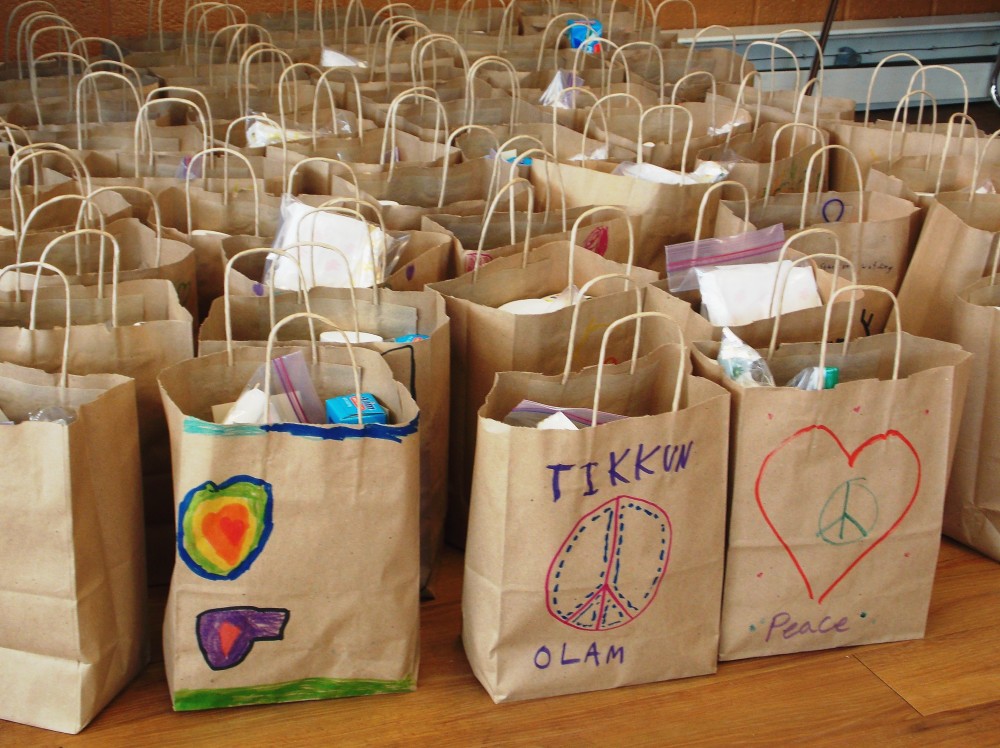 For the second year, Jewish Family Services of Delaware offers you the opportunity to repair the world a little at a time through our Blessing Bag project at the Yom Ha’atzmaut Community Celebration on May 15th! Volunteers of all ages will fill Blessing Bags with re-usable water bottles, toiletries, sanitary items, and inspirational quotes from the Jewish faith. The bags will then be distributed to JFS clients in need, providing them with the simple hygienic resources that many of us take for granted.
Community service groups, synagogues, and businesses have partnered with us to collect contents for 100 Blessing Bags. To help, you can collect and drop off donations of toiletry and hygiene items at all three JFS locations (Wilmington, Newark, and Lewes). Visit the JFS display at the Yom Ha’atzmaut Community Celebration to learn about the Israeli “face of giving” and make a Blessing Bag for someone in need.
——————————
The next time you go to a convenience store or a supermarket, grab an item or two to help us reach our goal! We are looking for donations of tooth brushes, tooth paste, sanitary wipes/ tampons, shower gel, shampoo, Kleenex, and hand sanitizer. To get involved, contact info@jfsdelaware.org.
Written by: Dory Zatuchni, CEO
Rabbi Nachman of Breslov once told the story of a prince who thought he was a rooster. He took off all his clothes, got under the table, ate crumbs off the floor, flapped his arms like wings, and crowed. Healers, and doctors, and advisors were called – but none could relieve him of his madness. Until a wise man came and said “I can help.”
The first thing the wise man did was take off all his clothes and get under the table with the prince. He put his arms out like wings and crowed. He told the prince “I am a rooster too.”
 Rabbi Nachman lived in an age before therapy. But it is clear from this and other parables he wove that he believed in the importance of recognizing and managing mental health conditions.
We know this because the first thing the wise man did was to meet the prince where he was. When he said “I am a rooster too,” he invited the prince to trust him. He told the prince that he understood. He told him that he would not be judged.
As time went on, the wise man gave the prince tools to change his behavior. “Wearing clothes,” he said, “does not mean we are not roosters.” Eventually, the boy learned that roosters could stand up straight, eat at the table, and speak with people.
The prince went on to become a wonderful king. But… he never forgot that he was really a rooster.
Many modern scholars believe that Nachman himself suffered from mental illness. He wrote powerfully about depression so intense that one cannot find the strength to move. Perhaps this is why he emphasized empathy over judgement in his stories. Why he taught about the tools of healing rather than the suppression of symptoms.
The lesson we learn from Nachman is not to suppress mental illness. It is rather to learn to manage mental health. It is to build on existing strengths and develop the skills to replace harmful patterns with healthy behavior. The lesson we learn is that for the one in four of us who are experiencing mental illness right now, there is hope. There is hope because in our community, there is help.
Jewish Family Services agencies throughout the country serve individuals and families facing mental illness and other challenges. In Delaware, JFS’s therapists provide more than 13,000 counseling sessions to families and individuals a year. Those 13,000 sessions enable people facing trauma, mental illness, or substance abuse to recover. Those 13,000 sessions are vital to the health of our community.
In the Jewish prayer for healing, we ask for refuat hanefesh and refuat haguf, a complete healing of both body and soul. After all, a healthy body and a healthy mind are equally important to living a full and satisfying life. Yet the stigma of mental illness pervades the Jewish community. When we are afraid to utter certain words aloud (depression, panic, bipolar, breakdown…), those who are suffering, suffer alone.
The Torah itself is full of characters struggling with their mental health. Saul suffered from bouts of depression and insanity, perhaps brought on by bipolar disorder. Hannah struggled intensely with the emotional toll of her infertility. After the trauma of nearly being sacrificed, Isaac likely suffered from PTSD and remained primarily silent and passive for the rest of his life.
If our biblical heroes could have named their mental illness or sought help in managing their mental health, how might their lives have been enriched? Perhaps the answer can be found in the story of Ruth and Naomi.
Ruth was the wife of Naomi’s son. When both women lost their husbands, they grieved together and cared for one another instead of going their separate ways. They developed a supportive and loving relationship that empowered them both.
I am proud of Jewish Family Services’ quiet yet constant work to improve mental health in our community. As one young client reflected, “this is the best thing for me and for us [my family]. It’s hard, but it works.”
We are all created B’tselem Elohim, in God’s image. Whatever your vulnerabilities, you deserve to be treated with dignity. Whatever burdens you carry, you deserve support that aligns with your values. That is why JFS exists. And as the CEO I feel privileged every day to help ensure that there is – and always will be – a safety net of support for this Jewish community.
———————————
My thanks to Rabbi Michael Kramer for introducing me to Nachman’s story of the Rooster Prince. Descriptions found in the Torah of the biblical leaders mentioned in this article can be interpreted as struggles with mental illness. Saul (1 Sam. 10:19-23; 11:5-7; 16:14); Hannah (1 Sam. 1:2 – 1:19); Isaac (Board of Rabbis of Southern California; based largely on his silence and passivity and his pension for seeking solitude); Ruth & Naomi (Ruth 1-3).
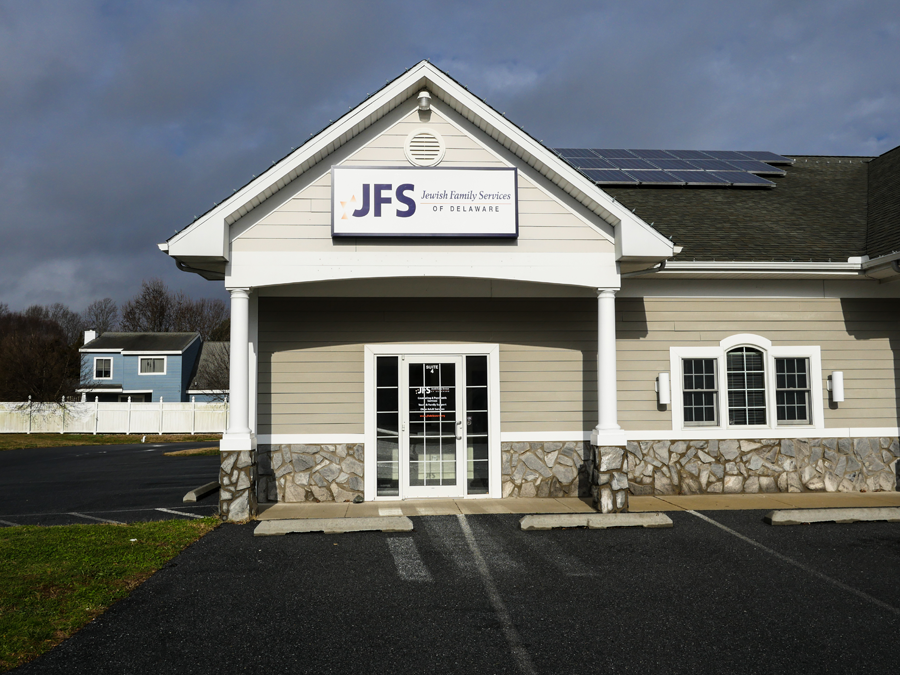 LEWES, DEL. – The new Jewish Family Services of Delaware (JFS) office in Lewes, Delaware has opened its doors. The facility, which opened for business on Monday, January 25, 2016 will bring much needed mental health services to the area.
By expanding its footprint into southern Delaware, JFS seeks to improve access to quality mental health care for children, adults, seniors, and families in Sussex County. The location of the new facility, at Creekside Professional Center at 20684 John J. Williams Highway, is “strategic,” said Dory Zatuchni, CEO of Jewish Family Services.
“This facility is an important step in making mental health services more easily accessible to families and children in an area that is underserved,” Zatuchni said. “We are excited for our staff to serve the mental health needs of residents in the Rehoboth and Lewes area, regardless of their ability to pay.”
Nationwide, nearly one in five adults struggles with mental illness, and many find it difficult to access the care that they need, studies show. Local community health needs assessments compiled in 2013 by Bayhealth Milford Memorial Hospital and Nemours/A.I. DuPont Hospital each identify the lack of mental health providers as a priority need in Sussex County. They also indicate higher rates of anxiety, depression, and mental health issues among children in Delaware’s southernmost county compared to the rest of the state.
A staff of licensed clinicians and a medical billing specialist will operate the 1,800 square foot office, which will be open from 8:30 a.m. to 5:00 p.m. Monday through Friday, with additional hours in the evenings and weekends available by appointment.
Each of the therapists have specific experience working with diverse populations including older adults, survivors of intimate partner violence, and the LGBTQ community, according to Zatuchni.
Additionally, the clinicians and psychiatrists based in Wilmington and Newark will be available to clients in Sussex County via telehealth technology.
The term telehealth, Dory explained, refers to providing clinical and psychological services remotely via telephone, email, or video conferencing. “It is vital to improving people’s access to mental health care, especially in areas where there are a lack of providers,” she said.
Like the JFS offices in Wilmington and Newark, the Lewes facility accepts Medicare, Medicaid, and most private insurances, and also provides financial help through sliding-scale fees for families that otherwise couldn’t afford services.
The new site receives funding from the Longwood Foundation and Highmark Blue Cross Blue Shield Delaware’s Blueprint for the Community grant program and ongoing support from the Seaside Jewish Community.
Last year, JFS provided counseling and support services to more than 3,200 people in Delaware and the Brandywine Valley through its two facilities in Wilmington and Newark.
About Jewish Family Services of Delaware: Founded in 1898, Jewish Family Services of Delaware (JFS) is a nonprofit, human services agency providing counseling and support services to more than 3,200 individuals and families throughout Delaware and the Brandywine Valley. With offices in Wilmington and Newark, JFS provides outpatient mental health services, support for older adults aging-in-place, risk prevention education, digital media training, workforce skills for at-risk youth, case management for previously adjudicated youth, a volunteer network, and a crisis alleviation program.