
WILMINGTON, DELAWARE
September 12, 2018
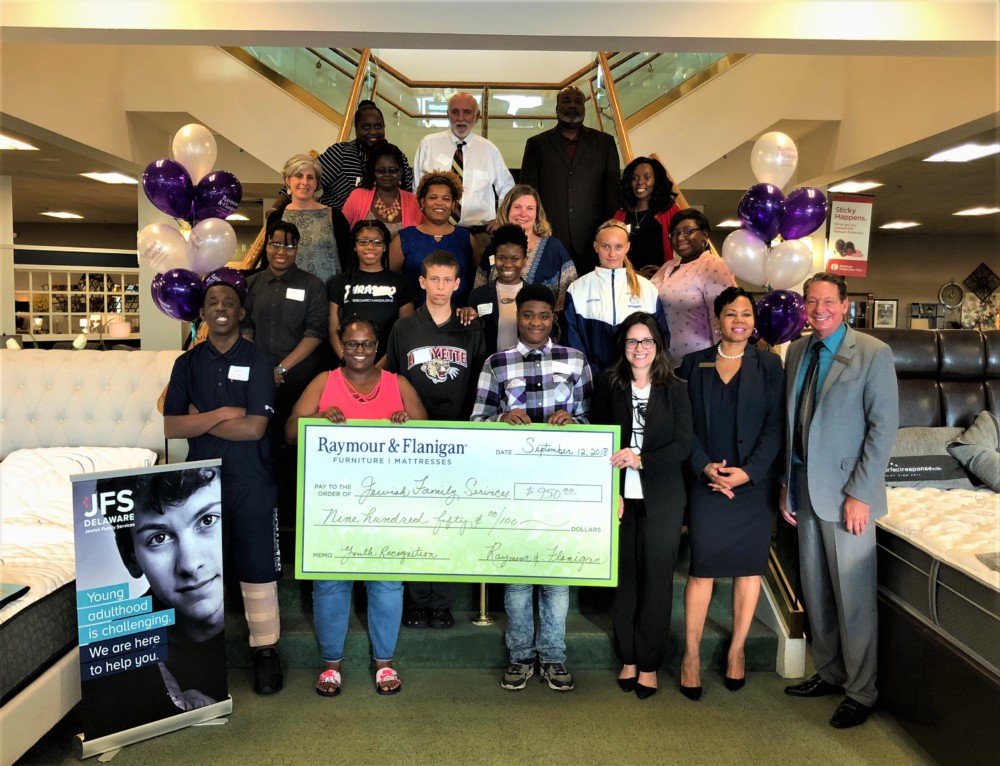 Jewish Family Services of Delaware was the highlighted nonprofit at the Raymour & Flanigan Furniture and Mattress Store on Concord Pike. As part of their community giving initiative, Raymour & Flanigan hosted an in-store Youth Recognition event in support of our youth programs. Students, families, community leaders, and JFS staff gathered on Wednesday, September 12th as the outstanding youth of our FutureNet & Media Matters workforce development programs were recognized; they were pleased to be joined by the community and celebrated for their commitment to learning and growth. The evening began with welcoming remarks from Sophie Namugenyi, JFS’ Director of Youth & Family Support, and Basha Silverman, CEO. Guests had an opportunity to view Public Service Announcements written and created by Media Matters students to address social issues that are meaningful to the group and promote positive messages to their peers. After students and community partners were recognized, guests mingled and enjoyed light refreshments in the beautiful Raymour & Flanigan showroom.
JFS is grateful to have received a donation from Raymour & Flanigan to benefit our mission to support & strengthen the community. Support from local businesses & community members help JFS thrive!
Samuel Kitts – Most Improved Student
Andrew White – Most Outstanding Student
Garrett Michaels – Most Dedicated Peer Leader
Tyreeya Mitchell – Jewish Mensch/Life Award
Dr. Barnett & Kingswood Academy – Best School Partnership
Apostle Frank & Perfect Will Ministries – Best Community Partnership
Chris Viviani & WSTW Radio Station – Best Career Site Tour
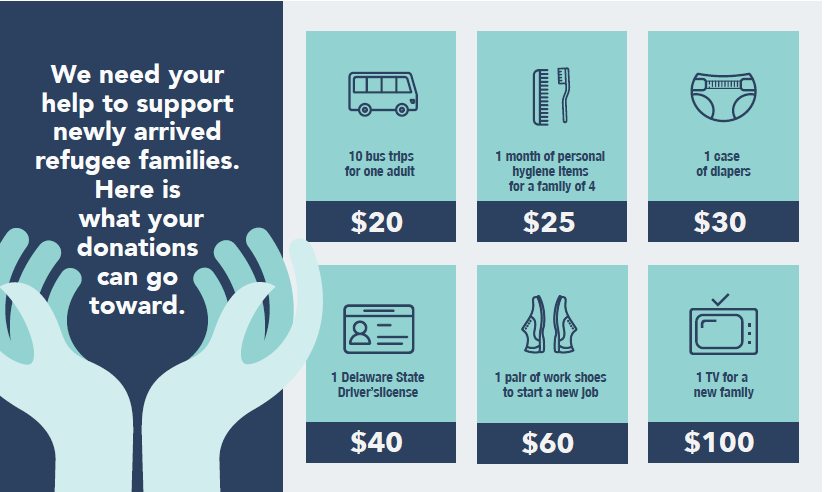
JFS’ Refugee Integration Support Effort (RISE) was featured in the July 2018 issue of the Delaware Journal of Public Health (pages 34-37). Authored by RISE Program Coordinator, Lourena Gboeah, the article includes the history of JFS, information on the current refugee crisis, details of JFS’ resettlement program and the processes required, and examples of our successful community partnerships that make this important work possible.
JFS has been working with refugee and immigrant populations – regardless of race or religion – since our founding. A refugee is defined as someone who has fled from his or her home country and cannot return because he or she has a well-founded fear of persecution based on religion, race, nationality, political opinion or membership in a particular social group. JFS has historical experience responding to international refugee crises; during the last major refugee crisis in the late 1980s, JFS was instrumental in resettling hundreds of families in Delaware from the former Soviet Union. Since 1997, JFS Delaware has been providing émigré services for refugees who have already arrived in the state and recently re-launched active refugee resettlement in 2016, at which time JFS became the only resettlement agency in the state.
JFS RISE staff members provide transition services and case management to help families resettle, while volunteers assist with tasks such as creating resource packets for local landlords and employers, sourcing furniture for apartments, and providing vital transportation. JFS works with over 300 volunteers through a coalition comprised of 30 faith-based and local community organizations; seven healthcare and dental providers; and four landlords. With the help of these irreplaceable partners, RISE finds the resources and support to house, host activities, offer educational opportunities including ESL classes and job training, secure medical services, and provide community integration efforts and cultural orientation to the newly arrived families. All of this ensures that the refugees feel welcome and secure in their new homes.
As the only resettlement agency in the state of Delaware, JFS continues to seek the support of community residents, business owners, property owners, and healthcare providers to strengthen our collaboration and ensure that we have the necessary resources for newly arrived families to settle safely and comfortably to become integrated members of our community.
See the featured article on pages 34-37 of the Delaware Journal of Public Health’s July 2018 Issue.
See also, highlights from JFS RISE receiving the Public Heath Recognition from the Delaware Public Health Association. The article about the awards ceremony begins on page 26, with featured photos of JFS on page 30, of the same July 2018 Issue.
Dear Sarah,
My 9 yr. old has suddenly developed a fear of fire. This means that at birthday parties she stays far away from the candles until they’re blown out. When we lit our Hanukkah menorah, she pitched a fit. She is struggling with general anxiety at the moment so this is clearly part of it, but our life is full of birthdays, holidays, and Shabbat – there are candles EVERYWHERE. How can we help her to move past this fear?
—Distressed Dad
Dear Distressed,
As her parent, you should initiate a conversation about her new fear. Start by asking questions to see if she had an experience related to fire that has made her fearful and more cautious when fire is present. You should also make sure that no one has said or done something, even accidentally, to cause her to be fearful. Your daughter should be reassured that having a fear of something is ok and she won’t be forced to be close to fire until she is ready. Make a plan with her ahead of time that gives her options of what she can do if fire is going to be part of an event. Let her give you ideas about what she thinks will make her feel more safe, and incorporate that into the plan. Children will usually outgrow their fears naturally, but if the fear causes your daughter extreme anxiety, making it hard for her to function in everyday activities, it may be helpful to have her talk with a professional.
—Sarah
Dear Sarah,
My outgoing, spunky son is struggling in school. He doesn’t like sports and is pretty vocal about it. He’s become the butt of jokes, and all I can see in my mind is him, standing alone in gym class, looking miserable. He has friends who are not sports driven, but the kids who are into sports seem to dominate the playground. I’m heartbroken for him – how can I help him?
—Social Mom
Dear Social,
There are many kids that do not want to participate in sports and feel uncomfortable when sports are required at school. If there is a concern about how he performs in a gym class, have a discussion with his teacher to find out more about the structure of the class. You may also discuss with the teacher what activities can be brought out to the playground so that your son and his friends have something to do that they like. Physical activity is important for youth, but not every activity has to be competitive. Involving teachers may be helpful in getting the more athletic kids to work with the rest of the class, so that everyone feels included. There might also be an opportunity to have the kids in your son’s class play board games, chess, cards or other activities of interest some days. You could also inquire whether, with supervision, your son could be offered a monitored tablet or phone use to play games on some days as an incentive to be more physically active on other days.
—Sarah
Dear Sarah is JFS’ advice column. Submit your questions, and receive answers and advice from one of our licensed therapists. Names and details will be altered in published letters to protect your privacy. All letters will be answered and can be viewed on our website.
Dear Sarah,
My closest friend is suffering from depression, and has been for some time. She is not comfortable seeking treatment – no therapy, no drugs. Day to day, she is able to function in her job. She is functional, but she is struggling and unhappy. Recently she has been pulling away, turning down all attempts to get together. Our relationship has been reduced to text messages from her that are getting shorter and farther apart. I don’t know how to support her when she is so clearly struggling. Should I try to talk to her honestly and tell her I’m worried about her, or should I let her be and wait this phase out? I know our friendship will be fine in the long term, but I am looking for the best way to give her the support I can, in a way that won’t make things worse.
—Concerned Carol
Dear Carol,
This is a difficult situation for you. I can imagine that it’s been painful to watch your friend struggle and to feel the distance between you two grow. The most important thing that you can do right now is to continue providing your friend with the support and love that she needs. Bringing up your own worries about her will only make her feel worse, as I’m sure she is well aware that she is struggling and unhappy. She may feel guilty or embarrassed about the impact her depression is having on her friendships. Send your friend supportive text messages and remind her that you will always be there no matter what and are there for whatever she needs. If she asks for help, then you can give her suggestions and advice but for right now, you need to be patient and understanding of where she is emotionally. When she is ready, she will seek and ask for help.
—Sarah
Dear Sarah,
Next month, my almost 13 year old and I will travel halfway across the country to help take care of my aging parents for a week. My mom is having knee replacement surgery, and we hope she’ll recover well. Knee problems comprise maybe 1% of her “issues,” which include chronic pain and increasingly worrisome forgetfulness. My dad is in decent health, but also manages challenges. I want it to be a nice visit; my folks live a long and expensive plane ride away, and I can’t make the trip often. They resist my efforts to help them get more help at home. Right now they just have someone come to clean the house every other week, but I would like to help them think through longer-term or bigger-picture solutions. I feel helpless in the face of their enormous needs, and I feel badly for sizing the situation up, so to speak, and finding it not in line with what I wish for them in their later years. I also feel guilty for not being there to help more often, and I can’t help finding my brother’s family’s efforts in this regard to be less than I think they should be. Meanwhile, I am painfully aware that I won’t have my parents in the world with me forever. One day, in the normal course of events, I will find myself missing them beyond belief. My question is that of someone navigating life in the “sandwich generation”: what’s a good way to get through the week and to manage my hopes about how helpful I can be?
—Sandwiched Son
Dear Sandwiched,
How wonderful that you can go out and be supportive of your parents after your Mom’s surgery. I really feel for you – it is so difficult to live so far away. I think before you go, ask your brother how it has been for him to deal with the day to day – really listen to him – it can been easy to be critical from afar. Ask him how he thinks you can be most helpful.
It can be frustrating and difficult, but also very rewarding to help our parents at this stage in their lives. There are many resources both on-line and in the community for older adults including social workers at the hospital. Professionals and agencies can play an important role in helping your family navigate this process and offer assistance to you and your parents in developing a care plan. Having your son with you may be helpful in several ways. Maybe he could spend time with your father – go for walks, interview him about his life. Looking at pictures together can be a way to help them to tell their stories. It could be a wonderful way for your son to bond with them.
—Sarah
Dear Sarah is JFS’ advice column. Submit your questions, and receive answers and advice from one of our licensed therapists. Names and details will be altered in published letters to protect your privacy. All letters will be answered and can be viewed on our website.
Dear Sarah,
I spent much of my early childhood living with a parent with mental illness. My father, who died by suicide when I was eight years old, struggled with bipolar illness for all of his adult life. I have very few memories of that time before my father died. Now, I have an eight year old daughter myself and during a recent visit with my mother we started looking at old baby pictures of mine. My daughter has started to ask questions about what happened to Zayde Bernie and I don’t know how or where to start talking to her about something that I did not come to understand until I was an adult. I feel like we need to start having this conversation because my family history of mental illness is also her family history. However, I want the conversation to be age appropriate.
—Painfully Parenting
Dear Painfully Parenting,
For an 8 year-old, I would focus on the basic fact that Zayde Bernie died, that he is missed by his family, and that he will always be with them in their hearts. You should share your memories of him (as should your own mother) and depending on what your daughter asks, you can talk about mental illness. I would not, at this time, talk to her about depression or suicide. This is a topic for an older teenager, when and if the teen or someone they love is struggling with depression, or the teen starts to ask questions about suicide. You’ve made a good start by looking at pictures with your daughter. Now is the time to let her ask the questions and share what you do remember of your father.
—Sarah
Dear Sarah is JFS’ advice column. Submit your questions, and receive answers and advice from one of our licensed therapists. Names and details will be altered in published letters to protect your privacy. All letters will be answered and can be viewed on our website.
Movies that Matter was created to raise awareness and expand the conversations related to issues affecting humanity, social justice, tolerance, racism, and prejudice.
For the inaugural event, in partnership with First Unitarian Church of Wilmington, Jewish Family Services (JFS) presented three thought-provoking nights of film, discussion, and awareness to the community to shed light upon the refugee experience. It is vital that, together, we build a more tolerant, respectful, and educated community that is prepared to receive and welcome refugees. “Over 200 people attended Movies that Matter and the feedback we have received has been overwhelmingly positive”, said Basha Silverman, CEO of JFS.
The three films shown were “The Good Lie”, “The Impossible”, and “The White Helmets.”
Thank you to our special guest speakers, including Dr. Jill Biden, Senator Chris Coons, CEO of HIAS Mark Hetfield, and University of Delaware Disaster Research Center staff members Dr. Tricia Wachtendorf and Dr. Jennifer Trivedi. We are extremely grateful to Anna Hamilton of Hamilton Investment Strategies, Inc. for her program vision, leadership, and lead sponsorship. Thank you also to Belfint, Lyons, and Shuman and First Unitarian Church for the program sponsorship, as well.
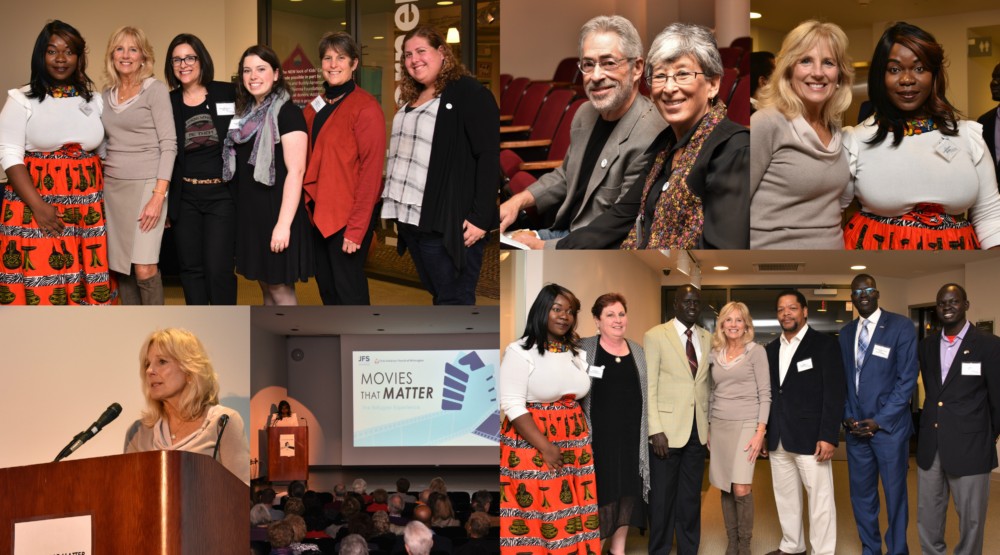
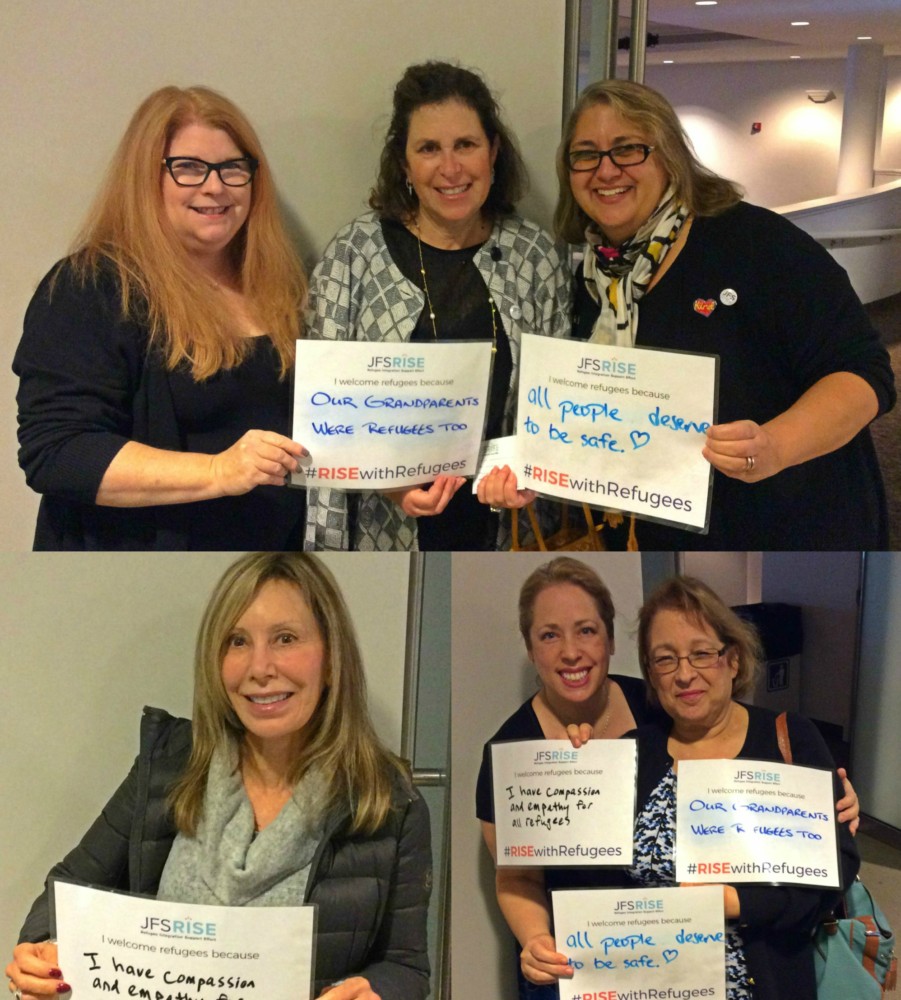
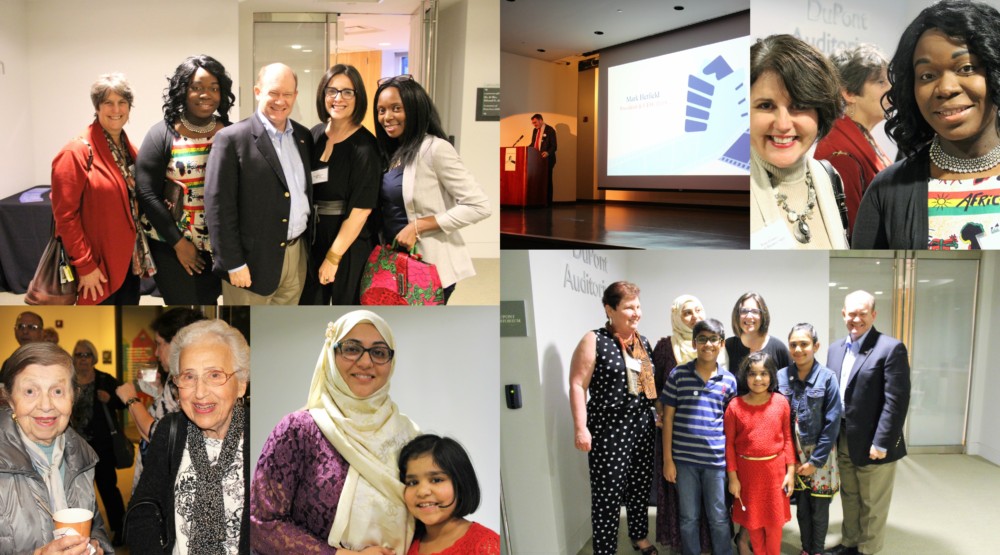
Thank you for making Delaware a place where refugees are welcome. We appreciate everyone who participated in Movies that Matter. The Refugee Integration Support Effort (RISE) would not be possible without the support of our community.
Dear Sarah,
I am writing to you because I cannot really speak openly to my friends about this matter.
Many of my friends are close with their grandchildren. Up until this year, I was extremely close with mine too. However things have changed with my oldest granddaughter, Ava, since she got a smartphone for her birthday. Every time she visits, she is glued to it. She does not want to chat, cook with me, or go shopping. She is looking at Snapchat and texting friends. Her mother will force her to put her phone away, but then she is just miserable and acts like she would rather be anywhere else except with me.
What should I say to my daughter about this situation—and also to my granddaughter? Give me some good advice for my family, Sarah.
—Discarded Bubbe
Dear Bubbe,
It is natural for you to want to spend time with Ava. To do this, you must work on making sure that she enjoys your company too. You can improve your relationship with her by respecting her needs. As a teenager (I assume she is), she needs time alone, and time with her peers. It’s not that Ava doesn’t care for you; her priority is learning the social skills she will need to be an independent adult. She can best learn that from friends.
That doesn’t mean that she can’t have a relationship with you as well. As the adult, you should be the one to create opportunities for the two of you to develop a “grown-up” relationship. How about a few short visits to your daughter’s house instead of the twice-yearly ones to yours? That way Ava can see you without disrupting her life. Find out what’s on her mind. Better yet, if you can’t beat them, join them! Ask for her help with a new app on your phone! My husband’s 90 year-old grandfather is active on social media, and texts all the grandchildren and great-grandchildren. Communicate with her on her own medium.
By the way, try not to get too caught up in your friends’ game of bragging about “perfect” children and grandchildren. People are not trophies to be won and displayed. The pressure of competition is sure to complicate and even sour relationships with the people you care about the most. Ava deserves the best you can give her; a bubbe who cares about her and her needs; a bubbe she can love.
—Sarah
Dear Sarah is JFS’ advice column. Submit your questions, and receive answers and advice from one of our licensed therapists. Names and details will be altered in published letters to protect your privacy. All letters will be answered and can be viewed on our website.
Steve Gonzer would like you to know that he’s really very shy and does not like to talk about himself. This month, we’re profiling him as a JFS Volunteer and, even though he said he didn’t know what to say, we think he says all the right things.
Steve has volunteered with JFS in many capacities over the years – from taking part in Adopt-A-Family during the winter holidays, to providing support for those with gambling addictions, to donating food to the JFS Food Pantry.
Everyone at JFS knows Steve: “Steve Gonzer has been a Pantry Champion! He has been calling every few weeks and asking what specific items we need, and delivering them by the trunk load!” shared our receptionist.
It is for his unofficial role as “Pantry Champion” that we are dedicating this Volunteer Spotlight to Steve.
——————–
JFS: So Steve, you’ve become a minor celebrity around JFS for your donations to the food pantry. What drives you to give back in this way?
SG: I’ve always felt the need to share what I have with others. I’m not just talking about food because it’s not hard for me to fill another bag at the grocery store for someone who needs it. I want to repair the world and I know that there are people who are not as lucky as me. I want to share what I have and hopefully, I can inspire others to give a little more for someone in need, like adding another bag of groceries during their weekly shopping trip.
JFS: You’re involved with JFS in a few different ways, what do you wish people knew about the organization?
SG: Well, for starters, JFS and the food pantry are a family affair. Everyone there is concerned about the greater community. They’re there to help the entire community, not just Jews. I drop off, I talk to people and I see all the services the agency provides. If more people can be inspired to come in and bring food, more people will see just how much JFS does.
JFS: You mentioned that it’s not hard to fill an extra bag (or cart) at the grocery store for someone in need. Back in the summer, you dropped off a whole bunch of peanut butter – what kinds of food can people donate to our food pantry?
SG: In my opinion, it’s important that food people want to eat is available. Whether that’s kosher food, Tasty Cakes, or peanut butter. I try not to eat junk food but I like it and I know that other people like to eat it too. But seriously, if people are not getting the proper nutrition, their potential is wasted. I like to call ahead and and find out what the pantry needs and then I get to go and shop for it. Even if it’s something I don’t eat, I know that someone will benefit from that food.
JFS: One of the values of JFS is B’Tzelem Elohim: treating others with the inherent dignity that arises from the belief that all human beings were created in the image of G-d. How do you think donating to the food pantry fills that value?
SG: When I hear of people saying they have to choose between food and medicine, I know there’s no reason for that. There is no excuse for hunger when we have an abundance of food available. Where there is food insecurity, there is a breakdown in human dignity. Why should anyone who has the means donate to the food pantry? The better question is: Why doesn’t everyone with the means donate to the JFS food pantry?
———————–
The JFS Food Pantry is open to all current clients of JFS including older adults, therapy clients, and refugee families. Learn more >>>
JFS is publishing a new advice column that will appear in each issue of Jewish Federation of Delaware’s monthly jVOICE Magazine. Submit your questions, and receive answers and advice from one of our licensed therapists. Names and details will be altered in published letters to protect your privacy. All letters will be answered and can be viewed on our website.
Dear Sarah,
My aging mother has been saying lately that she is ready for her life to end. I love my mother, I want her to be around. Of course she has the usual problems: cataracts, arthritis, poor hearing, but I believe that her life still has meaning and pleasure. It would be different if she were in pain, I could understand that. I know it has been hard on her seeing friends and people she loves die but what can I say or do for her to let her know that there are still people here who want her to be around for a long time.
—Miserable Daughter
Dear Daughter,
One of the most futile exercises in the world is telling someone else how they should feel. Your mother does feel that she has had enough. Sometimes this means that she has accomplished everything she wanted to do, and so has no goals left to strive for. Sometimes this can be the product of depression or a medical or emotional upset. Try to draw your mother out and find out why she feels ready to die. Then perhaps you can help her.
You will find it difficult to help her unless you realize why you are feeling so upset about your mother’s readiness to die. At whatever age, we tend to see our parents as a loving umbrella which stands between us and the cold, cruel world. Loss of a parent makes us realize our own aloneness and mortality. You might want to open a discussion with your mother with the observation that Judaism believes that every life is precious, including hers. Be prepared to share your own feelings, and be prepared to listen very carefully to hers.
—Sarah
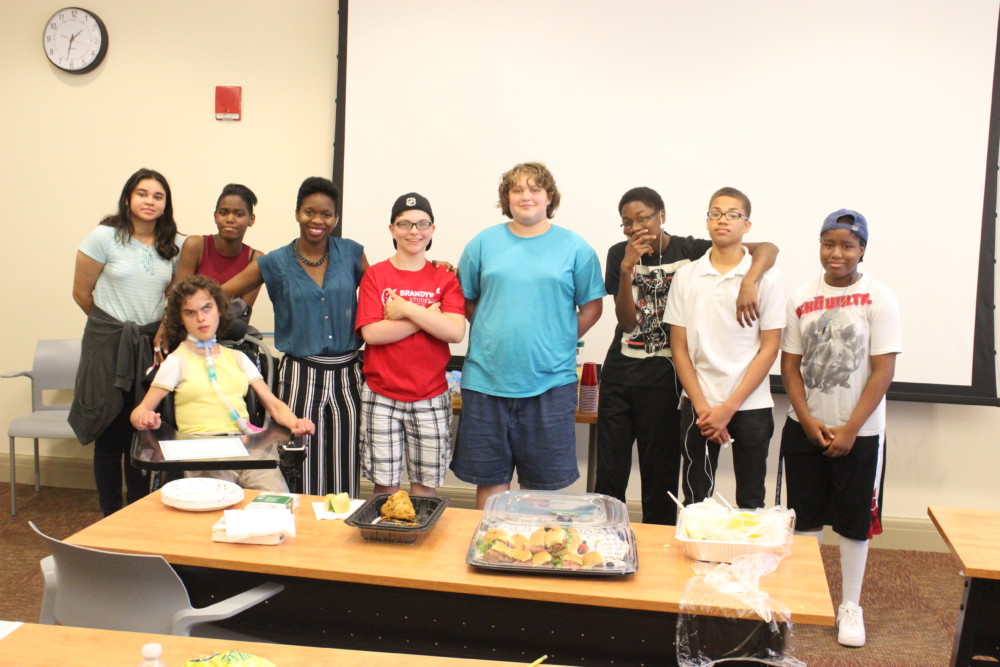 A wonderful group of 22 students in grades 8 through 12 completed JFS’ summer pre-employment camp in August through the Pre-Employment Transition Program (PETS).
Instructors worked with the students, ages 14-21, to address ways on how to find and maintain jobs, especially for students who experience personal challenges and have foreseen barriers.
Over the course of the summer camps, the groups participated in career exploration activities, resume writing, mock interviews, and video production.

On August 10, State Representative Valerie Maglio Longhurst and Attorney General Matt Denn visited the youths and shared their thoughts on the value of public service, then engaged the group in a discussion of their thoughts on gun violence.
In addition to Denn and Longhurst, an array of speakers met with the campers to discuss career paths, including a public defender, entrepreneurs, and a representative of the Delaware National Guard. Students also learned about finances, budgeting, and the importance of credit from a guest speaker affiliated with Stand By Me Delaware.
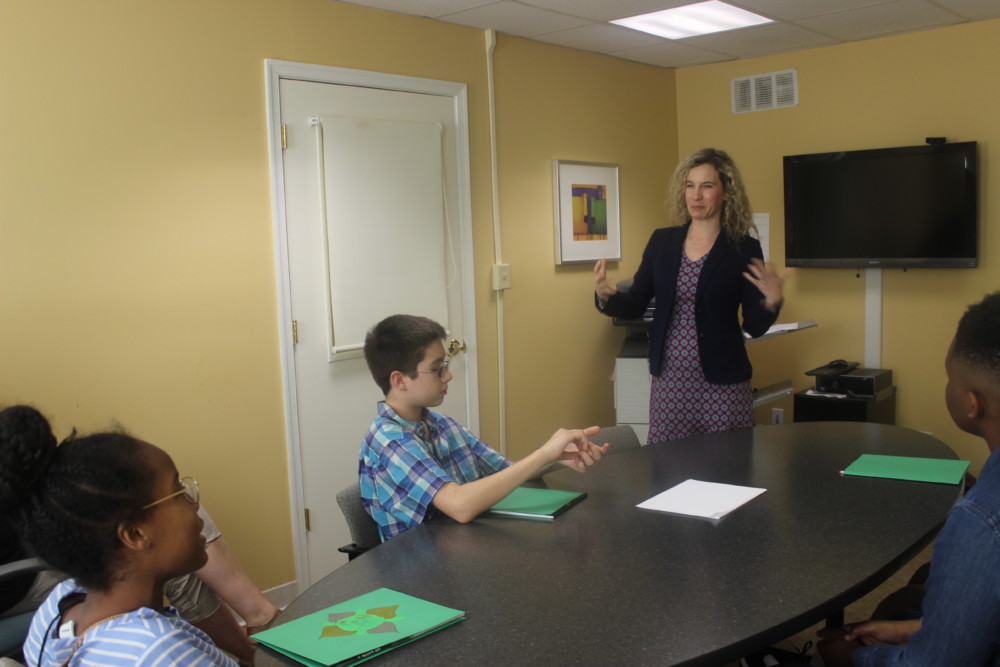 The group also visited different job sites including Radio Stations (99.5 WJBR and 93.7 WSTWFM), Christiana Care, and the Grand Opera House, where they had the chance to talk about careers in art, hospitality, marketing, and stage technical support.
Since camp ended, parents and students have reached out to JFS sharing stories about the impact of their experiences. Ms. Ryals, a mother of 4 campers enrolled in the week-long program, gladly shared that her “daughter’s confidence level increased during and after camp. She participated in mock interviews and was able to work on her resume, which in turn helped her to secure her first job.” Just one week after completing the camp, Ryal’s daughter found a job at a Home Assistance facility!